
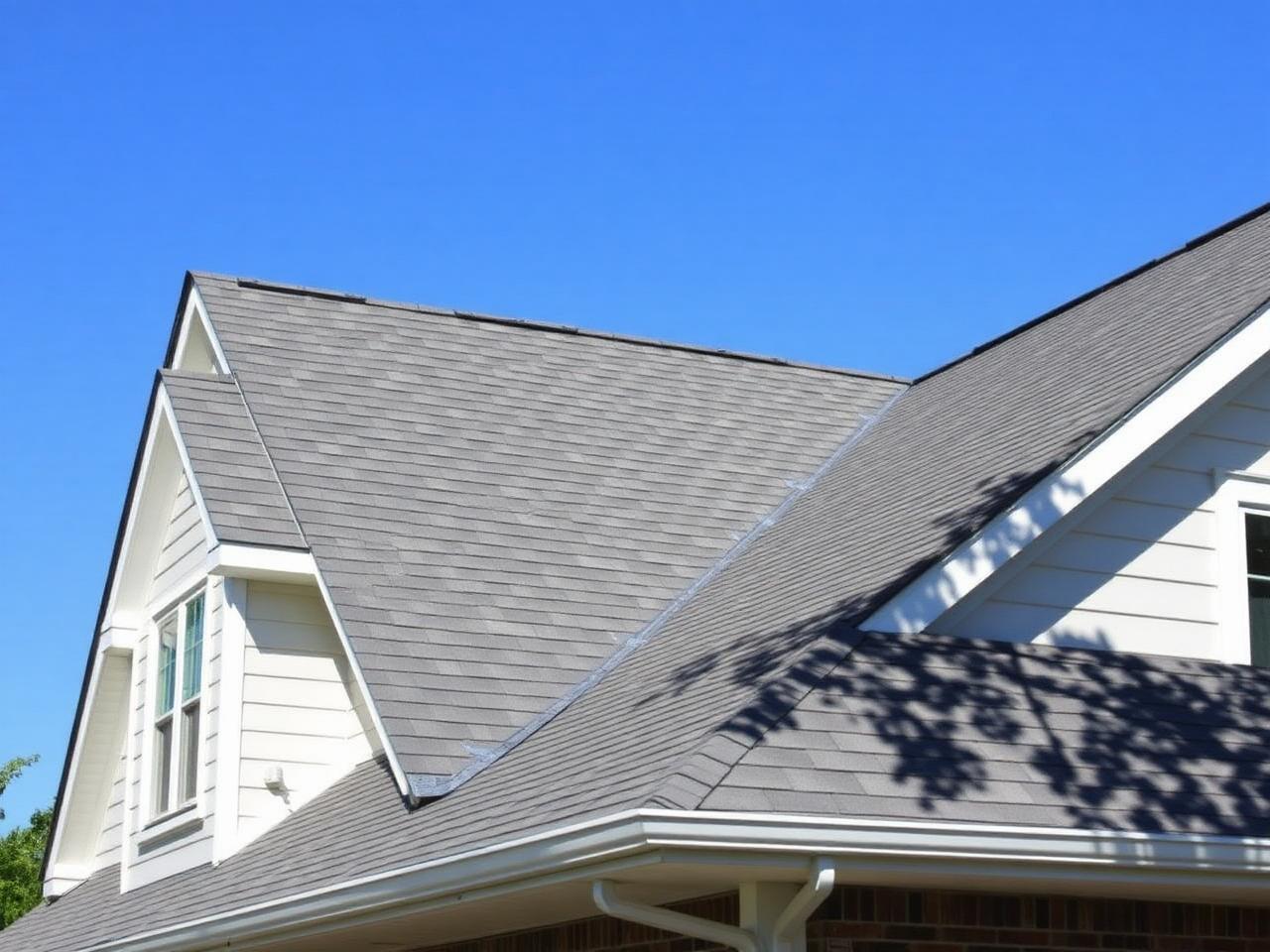
Why Flashing Fails
Flashing is the thin metal — usually aluminum or galvanized steel — installed at every point where the roof plane meets something that interrupts it: a wall, a chimney, a skylight, a vent pipe. Its job is simple: shed water away from the seam rather than letting it find a way underneath the shingles. When flashing fails, it's rarely because the metal itself wore out; it's almost always about how it was installed or what's happened around it since.
The most common failure point is sealant. Flashing at vent pipes, skylights, and wall step-flashing often relies on a bead of roofing cement or sealant at the transition, and that sealant dries, cracks, and shrinks over years of sun and temperature swings well before the metal itself is compromised. Once the seal opens even a hairline gap, wind-driven rain can work its way underneath.
The other common cause is physical movement or damage — flashing that's been lifted by wind, bent by ice, or knocked loose by a fallen branch. Even flashing installed correctly can be pulled just far enough out of position to open a path for water, and because flashing sits low-profile against the roof, this kind of damage is easy to miss from the ground.
Improper original installation is a third cause: step flashing that wasn't woven correctly into each shingle course, or a single continuous piece used where step flashing was actually needed. This kind of problem doesn't always leak right away — it can take a specific wind direction or a heavier-than-usual rain to expose it, which is part of why some leaks seem to start years after a roof was installed or a wall was added nearby.
Valley Leaks: Where Two Roof Planes Meet
A valley is the V-shaped channel formed where two roof slopes meet, and it carries a disproportionate amount of water compared to the rest of the roof — every drop that falls on either adjoining slope drains through that single line. That volume is exactly why valleys are more leak-prone than an open field of shingles: there's simply more water moving through a smaller area, and any weak point gets tested constantly.
Valleys leak for a few specific reasons. Debris — leaves, pine needles, granule buildup — collects in the valley and can dam water, forcing it to back up under the shingle edges instead of flowing down and off. Improperly cut or overlapped shingles at the valley line leave a gap for water to find, and valley metal, where it's used instead of a woven-shingle valley, is subject to the same sealant and fastener issues as any other flashing.
Because valleys concentrate water flow, a valley leak often shows up as water intrusion well below the actual leak point — it can travel along the underlayment or decking before finding a gap in the interior ceiling or wall, which sometimes makes the interior stain look like it's coming from a different part of the roof entirely.
Chimney Leaks: A Different Kind of Problem
Chimneys leak differently than valleys or vent flashing because a chimney is a masonry structure that moves independently from the roof framing around it — it settles, expands, and contracts at a different rate than the wood-framed roof, and the flashing has to accommodate that movement over decades. That's why chimney flashing is typically two-part: step flashing woven into the roofing on the sides and base, and counter-flashing set into a mortar joint or reglet cut into the brick, overlapping the step flashing from above.
The most common chimney leak points are the counter-flashing-to-mortar joint, which opens up as mortar ages and cracks, and the crown or cap on top of the chimney, where deteriorated mortar allows water straight into the flue and chimney cavity. A cracked or missing chimney cap, or a chimney with no cap at all, is a frequent and often overlooked leak source, especially on older masonry chimneys.
Because chimney flashing repair sometimes involves both the roofing side — step flashing, shingles — and the masonry side — repointing mortar, resealing counter-flashing — it's one of the leak types most likely to need a look from someone who can assess both trades rather than treating it as a pure roofing question.
Repair, Not Replacement — And Getting a Fix That Lasts
A single flashing failure at a chimney, valley, vent, or wall transition is almost always a straightforward repair, not a reason to consider a full re-roof — the deciding factors for repair versus replacement come down to roof age, how many shingle layers are already down, and how widespread any damage is beyond the leak point itself. We cover exactly how that call gets made in our full guide on roof repair vs. replacement, so we won't re-cover it here.
What does matter for a lasting fix is treating the actual cause, not just the symptom. Flashing repairs done as a quick surface patch — a smear of roofing cement over the visible gap without addressing why water is getting there — tend to fail again within a season or two, because the underlying gap, movement, or improperly woven flashing is still there underneath the patch.
A repair that holds means removing the affected shingles or flashing section, correcting whatever let water in — a re-cut valley, properly woven step flashing, repointed mortar at a chimney — and reinstalling with new flashing and sealant. If you're dealing with a recurring leak at the same point, one that seems to get 'fixed' every year or two and comes back, that's usually a sign the underlying cause was never actually addressed, and an inspection can identify the real failure point rather than the symptom.
Insurance Documentation for These Repairs
If the damage causing a flashing, valley, or chimney leak resulted from a storm — wind that lifted flashing, hail that damaged shingles at a valley, or a falling branch — the same insurance-claim documentation process used for full roofing claims applies here: photos of the damage, a written scope of work for the adjuster, and, if needed, someone from our team on-site to meet the adjuster and walk through the damage directly.
Because these leak points are less visually obvious from the ground than a large area of missing shingles, a professional inspection is often what turns a vague sense of 'there's a leak somewhere near the chimney' into documented, specific damage an adjuster can evaluate — which matters whether you're filing a claim or just deciding how to prioritize the repair.
Ready for a free roof repair inspection? See our roof repair services →