
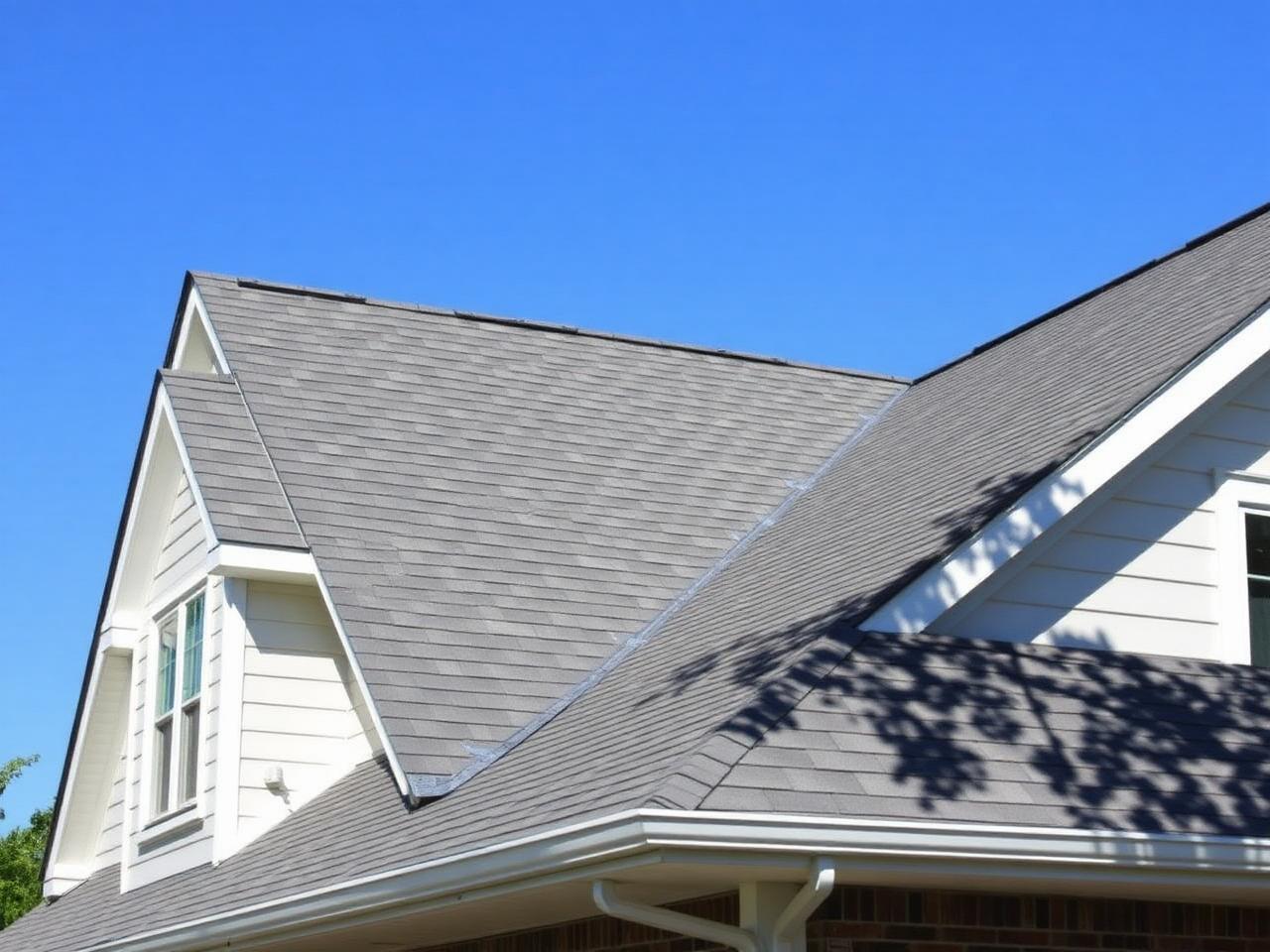
Why Roof Repair Pricing Looks Inconsistent
Roof repair pricing confuses homeowners because it doesn't scale the way people expect. Replacing eight shingles doesn't cost twice what replacing four costs, and a repair on a walkable ranch can cost a fraction of the identical repair on a steep two-story. That's because a meaningful share of any repair's cost isn't the work itself — it's getting a crew, a truck, and materials to your house and safely onto the roof, and that cost is nearly identical whether the repair takes twenty minutes or two hours.
This is why most roofing contractors have an effective minimum for a service call, and why a very small repair can feel disproportionately expensive relative to the materials involved. It isn't padding. It's the reality that mobilizing to a job site has a fixed cost, and a contractor who prices small repairs below that cost simply stops taking small repairs.
The three variables that move a repair quote most are access, pitch, and diagnosis. A steep roof requires fall protection, staging, and slower work. A second or third story adds ladder and access time. And a leak whose source isn't obvious requires investigation before any repair happens at all — sometimes the most valuable part of the visit is finding out that the water showing up in a bedroom ceiling is entering the roof fifteen feet away.
Minor Repairs: Shingles, Boots, and Small Flashing Work
The most common repair we're called for is straightforward: a handful of shingles blown off or cracked, a failed pipe boot, a small section of lifted step flashing, or a loose ridge cap. On an accessible roof with a normal pitch, repairs in this category typically run in the low hundreds of dollars, and they're usually a single-visit job.
Pipe boots deserve specific mention because they're the most under-appreciated leak source on an otherwise healthy roof. The rubber collar around a plumbing vent pipe degrades from sun exposure and typically cracks around the ten-to-fifteen-year mark — well before the shingles are finished. A cracked boot lets a small, steady amount of water into the attic, often producing a ceiling stain that appears years after the roof was installed and gets misread as a failing roof. Replacing one is inexpensive and very often resolves the whole problem.
Emergency tarping, when a roof is actively leaking and weather won't permit a proper repair, is its own line item and typically runs a few hundred dollars. It buys time and limits interior damage; it isn't a repair, and it shouldn't be priced or presented as one. Our full guide on what to do in the first twenty-four hours of an active leak covers how to handle that window.
Mid-Range Repairs: Valleys, Chimneys, and Larger Sections
Repairs that involve valleys, chimney flashing, skylight flashing, or a section of shingles across several courses generally land in the high hundreds to low thousands. These take longer, require carefully removing and reinstalling surrounding shingles to weave the repair in correctly, and often involve fabricating or replacing metal rather than simply resealing it.
Chimney work is the most variable item in this range because it can cross trades. If the leak is at the counter-flashing and the mortar joint it sits in has deteriorated, a lasting repair means masonry work — repointing or recutting the reglet — alongside the roofing side. A quote that only addresses the flashing on a chimney with failing mortar is a quote for a repair that will come back. Our guide on flashing, valley, and chimney leaks covers why each of these fails and what a real fix involves.
Any repair in this range that follows a storm is worth evaluating as an insurance claim before paying out of pocket. Wind-lifted flashing and hail-damaged shingles at a valley are covered perils, and the documentation process for a partial repair is the same as for a full replacement. It's a free inspection either way, and finding out costs nothing.
Major Repairs: When the Decking Is Involved
Once water has been getting in long enough to soften the roof decking underneath, the job changes character. Rotted sheathing has to be cut out and replaced before anything goes back on top of it, and the extent isn't knowable until the shingles come off. Repairs at this level generally run into the low thousands and up, with the range driven almost entirely by how much decking turns out to be compromised.
This is the category where a fixed quote before opening the roof isn't possible, and any contractor who gives you one is either padding heavily to cover the unknown or is going to come back with a change order. The honest approach is a diagnostic price for the known work plus a clearly stated per-sheet rate for decking replacement, so you know exactly how the number moves if more is found.
It's also the point where the repair-versus-replace question becomes genuinely financial rather than obvious. Spending several thousand dollars on decking and a section of shingles on a roof that's twenty years old means doing it again, in full, within a few years — and paying for the same access and mobilization twice.
When Repair Stops Making Sense
Full asphalt shingle tear-off and replacement in Metro Detroit typically runs $9,000 to $18,000 for an average-size home, depending on pitch, the number of existing layers, and shingle grade. That figure is the useful benchmark for every repair decision: a repair that costs a meaningful fraction of it, on a roof with limited life remaining, is usually money spent twice.
Three signals in particular tend to move the answer toward replacement. Age is the first — an asphalt roof past twenty to twenty-five years is at or near the end of its service life regardless of how any single repair goes. Multiple layers is the second, because a roof already carrying two layers has to be fully torn off eventually, and repairs on top of a double layer are harder to do well. Recurrence is the third: a leak that has been repaired more than once at the same location is telling you the underlying failure was never actually addressed, and continuing to patch it is a subscription rather than a fix.
We repair what's actually damaged, and we don't recommend a re-roof by default. A handful of missing shingles or a single flashing failure on a roof with years of life left is a repair, and we'll do it as one. But we'll also tell you plainly when a repair is a short-term fix on a roof that needs replacing, because finding that out after you've spent the money helps nobody.
Ready for a free roof repair inspection? See our roof repair services →