
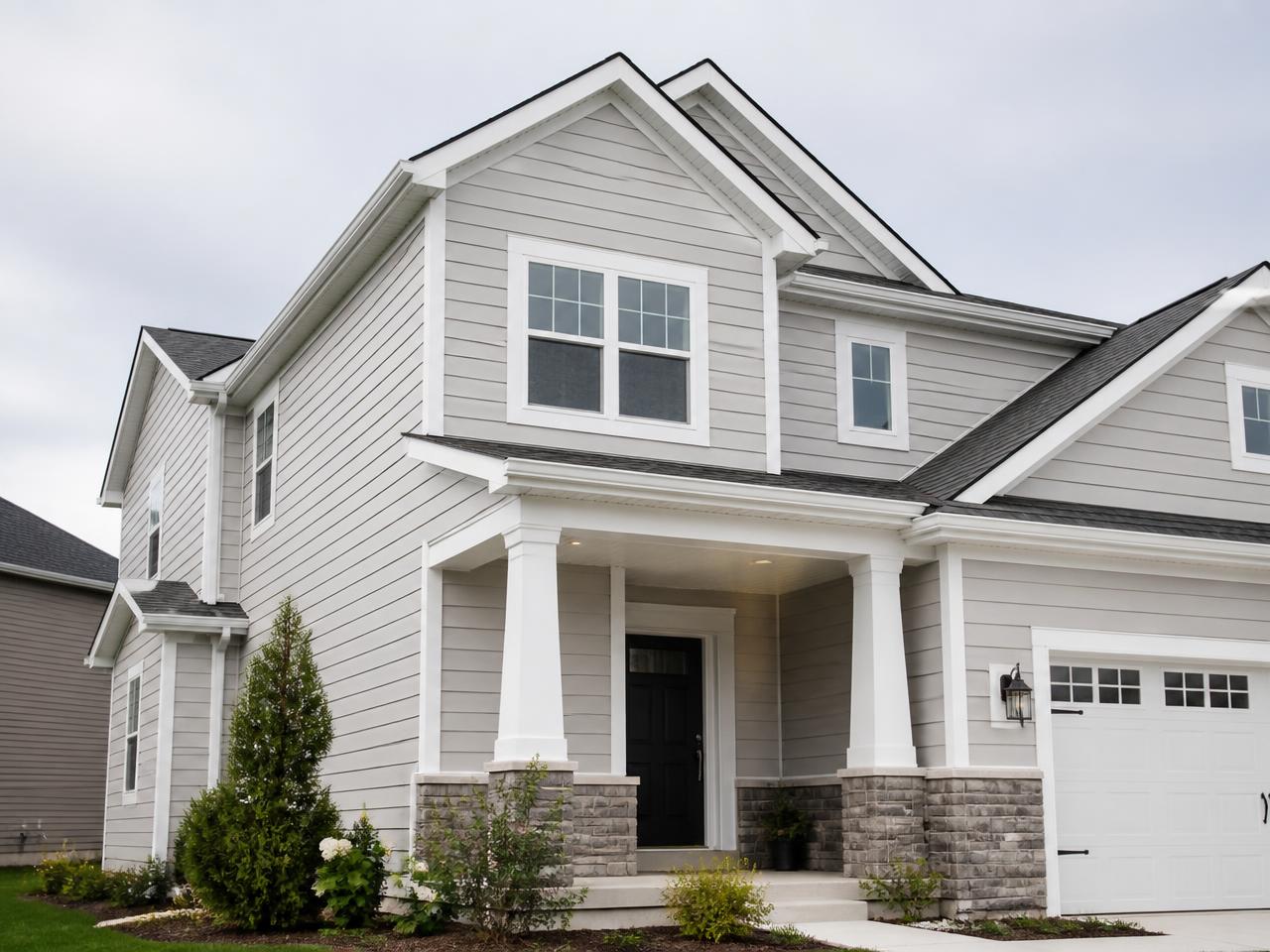
What Siding Actually Costs, Installed
Siding is priced by the square — a roofing and siding term meaning 100 square feet of wall area — but almost nobody quotes homeowners that way, because the number that matters is the installed total on your specific house. For an average-size Metro Detroit home with roughly 1,800 to 2,000 square feet of wall area, insulated vinyl generally lands in the mid-to-high teens of thousands, fiber cement runs meaningfully higher, and engineered wood sits between the two. Those are working ranges, not quotes; the spread within each material is wide enough that a number sight-unseen is close to meaningless.
What moves the price inside a material tier is mostly geometry and detail work, not the siding itself. A simple two-story colonial with long uninterrupted runs of wall is far cheaper per square foot than a home with dormers, gables, bay windows, multiple rooflines, and stone or brick accents that all need to be cut around and flashed into. Every corner, every window, and every transition is labor that a flat wall doesn't require, and on a detail-heavy house that trim and cut work can rival the cost of the siding panels themselves.
The second big variable is what comes off and what goes back on. Tear-off and disposal of the existing siding is real labor and real dumpster cost. Soffit, fascia, and gutters are frequently bundled into a siding project because it's the one time they're easy to reach, and that bundling is often why one quote looks dramatically higher than another — it isn't always the siding, it's what else is included. When you compare bids, compare scope lines first and material second.
Finally, there's what nobody can price until the old siding is off: sheathing condition. Rot around windows, corners, and anywhere old flashing failed is common on older Metro Detroit housing stock, and repairing it is unavoidable if the new siding is going to last. A quote that doesn't acknowledge the possibility of sheathing repair isn't a better price; it's an incomplete one.
Insulated Vinyl: The Value Option That Got Better
Vinyl siding earned a reputation decades ago for looking cheap and going brittle in cold weather, and that reputation hasn't kept pace with the product. Modern insulated vinyl bonds a contoured foam backing directly to the panel, which does three useful things at once: it adds a modest amount of continuous insulation across the wall, it stiffens the panel so it lies flatter and reads less like plastic, and it dampens the hollow sound older vinyl was known for.
The practical case for insulated vinyl is maintenance and money. It never needs painting, it doesn't rot, and it doesn't need the periodic caulk-and-recoat cycle that painted materials do. Color is molded through the panel rather than applied on top, so a scratch doesn't expose a different color underneath. For a homeowner who wants the exterior handled and not thought about again, that's a genuine advantage, not a consolation prize.
The tradeoffs are real too. Vinyl has less impact resistance than fiber cement — a hard hailstone or a stray baseball can crack a panel in cold weather, though individual panels can be replaced. The color range is limited at the darker end, because dark vinyl absorbs heat and can distort. And while today's profiles look far better than the vinyl of twenty years ago, a discerning eye can still tell the difference at close range, which matters more on some architecture than others.
Where insulated vinyl makes clear sense: rental and investment properties, homes where the exterior budget is competing with a kitchen or a roof, and homeowners who don't expect to be in the house for another twenty-five years. Choosing it isn't settling — for a large share of Metro Detroit homes it's the correct answer.
Fiber Cement: The Premium Case
Fiber cement is a mix of cement, sand, and cellulose fiber pressed into planks, and it behaves much more like a building material than a cladding product. It doesn't burn, insects don't eat it, and it handles Michigan's freeze-thaw cycling and impact better than anything else in this comparison. Factory-applied finishes hold their color for a long stretch before repainting becomes a conversation, and when it is time, fiber cement takes paint well rather than being stuck with what it came with.
Visually, it's the closest thing to real wood in this group. The plank thickness casts a genuine shadow line, the exposure can be varied, and the crisp trim detailing it supports is why fiber cement dominates on architecture where the exterior is doing real work — craftsman, farmhouse, and anything with substantial trim. On a home where the siding is the design, this is usually the material that gets specified.
You pay for that in two places. The material costs more, and the labor costs more, because fiber cement is heavy, has to be cut with specialized blades and dust control, and is far less forgiving of a sloppy install. It also isn't a maintenance-free product: it needs to be caulked properly at joints and repainted eventually, and it needs correct clearance at grade and at roof lines or it will wick moisture. Done right it lasts decades; done carelessly it fails in ways vinyl wouldn't.
The honest way to frame the decision is time horizon. If you're staying in the house long-term, or the home's value is tied to how the exterior presents, fiber cement usually justifies its premium. If you're not, the extra spend is difficult to recover at resale relative to a well-installed insulated vinyl job.
Engineered Wood: The Middle Ground
Engineered wood siding is made from wood strands or fibers bonded with resin and treated for moisture and insect resistance, then finished with a factory coating. It splits the difference between the other two options fairly literally: it costs less than fiber cement and more than vinyl, it gives you real wood grain and deep shadow lines, and it's substantially lighter than fiber cement, which keeps installation labor down.
Its strongest argument is appearance per dollar. On a home where you want the look of wood siding without the cost and upkeep of true cedar, engineered wood gets remarkably close, and it comes in long lengths that reduce the number of visible butt joints across a wall — a detail that reads as quality even to people who couldn't say why.
The caution with engineered wood is that it is, at its core, a wood product, and wood products are unforgiving about water. Cut ends must be sealed, ground clearance and flashing details have to be right, and any spot where water can sit and wick will eventually cause swelling or delamination. Manufacturers are explicit about these requirements, and warranty coverage generally depends on them having been followed. This is a material where installer discipline matters more than the brand on the box.
It's a good fit for homeowners who want a warmer, more textured exterior than vinyl, on a house with reasonably straightforward detailing, without stepping all the way up to fiber cement pricing.
What's Behind the Siding Matters More Than the Siding
Here's the part that almost never shows up in a siding comparison and probably should lead it: the failures we get called out to fix are rarely failures of the siding material. They're failures of the water management behind it. House wrap that was lapped in the wrong direction, window flashing that wasn't integrated with the wrap, missing kick-out flashing where a roof meets a wall, or no drainage gap at all behind a material that needed one. In each case the siding looks fine from the street while the sheathing behind it quietly rots.
This is why two quotes for the same material can differ substantially and both be honest. One may include a full tear-off, new house wrap, corrected window and door flashing, and proper kick-out details; the other may be a siding-over-siding install that leaves whatever is behind it untouched. The second is cheaper and faster, and on a wall assembly that's genuinely dry and sound it can be acceptable — but you should know which one you're buying.
The practical takeaway when comparing bids: ask what happens to the existing siding, what wrap and flashing are being installed, and what the contractor does if rotted sheathing turns up after tear-off. A contractor who has a clear, unhesitating answer to that last question has done it before. We inspect sheathing after tear-off, show the homeowner anything we find, and price the repair before proceeding rather than covering it back up.
Storm Damage, Insurance, and Timing
Siding damage from hail and high wind is claimable through homeowners insurance the same way roof damage is, and in Metro Detroit the two often happen in the same storm. Hail that bruises shingles frequently cracks or dents siding on the storm-facing elevation at the same time, and wind that lifts flashing can pull panels loose. If you're already filing a roof claim, the siding should be part of the same inspection rather than a separate conversation six months later.
The documentation standard is the same as it is for roofing: photographs of the damage, a written scope an adjuster can evaluate, and someone from the contractor's side available to walk the damage with the adjuster on-site. Our team trains continuously on what carriers currently expect, which matters because siding damage is easier for an adjuster to under-scope than a missing patch of shingles — cracks and impact marks read as minor from twenty feet away.
On timing: siding installs well in Michigan for most of the year, but vinyl gets brittle in deep cold and fiber cement cutting is miserable in the wet, so late spring through fall is the comfortable window. If you're coordinating siding with a roof, a window replacement, or an addition, sequence matters — the roof and any structural work should be finished before the wall cladding goes on, so the flashing details tie together correctly rather than being retrofitted.
Ready for a free siding inspection? See our siding services →