
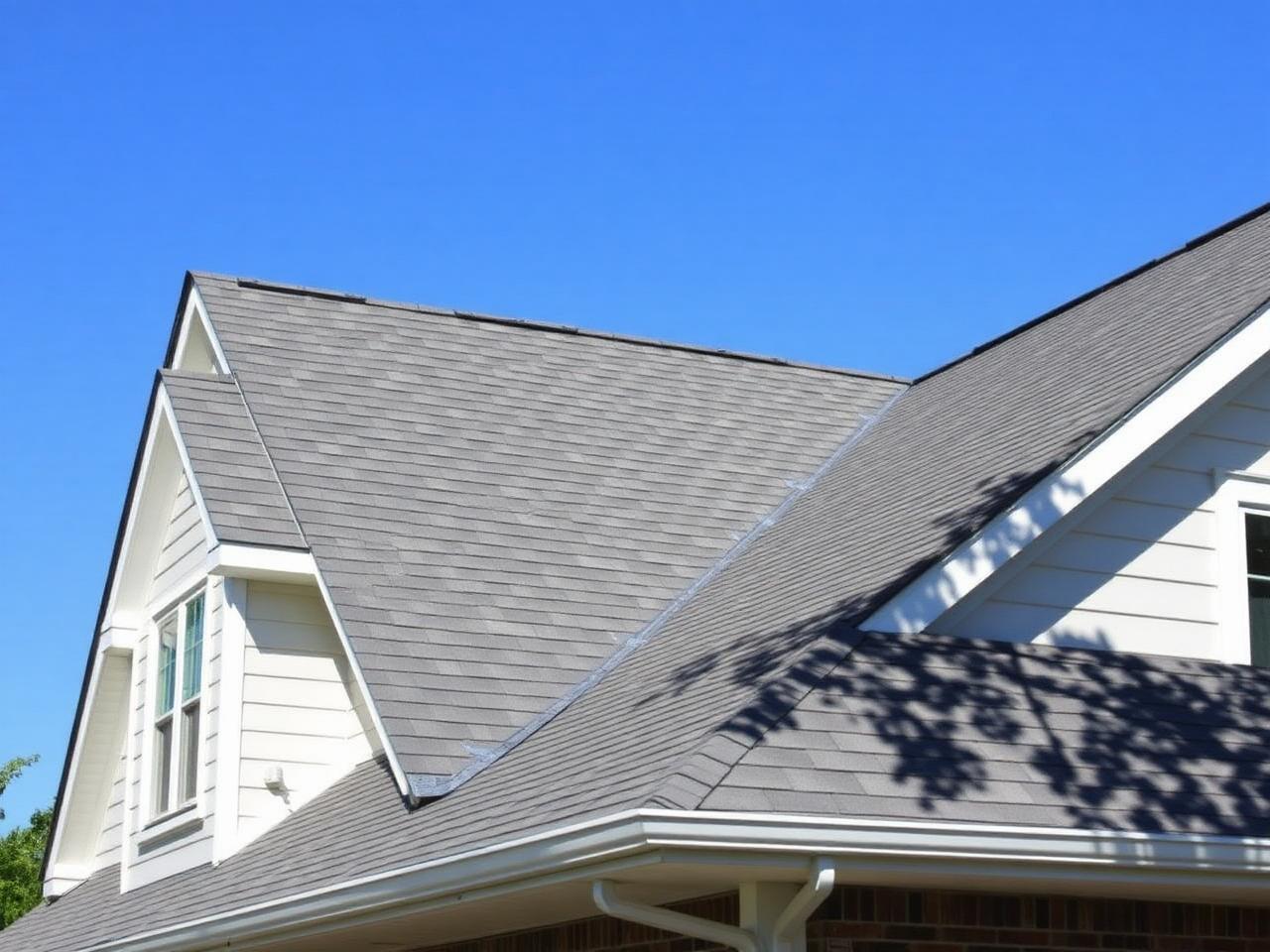
Start with the age of your roof
In Michigan's freeze-thaw climate, a standard asphalt shingle roof typically lasts 20–25 years. Metal and standing-seam roofs last considerably longer, but the underlayment, flashing, and fasteners still age. If you don't know your roof's install date, check your home's purchase disclosures, a permit record with your municipality, or ask the previous owner.
A roof in that 20+ year range doesn't automatically need replacing, but it does mean any storm damage is more likely to justify a full replacement rather than a spot repair — the rest of the roof is aging out anyway.
Signs your roof is nearing the end of its life
Granule loss: check your gutters and the ground below downspouts for a gritty, sand-like buildup. Shingles lose their protective granules as they age, and heavy loss accelerates UV and water damage.
Curling or cupping shingles: shingle edges that lift or cup upward are losing their seal and are more vulnerable to wind uplift.
Cracked, torn, or missing shingles: isolated missing shingles are often a straightforward repair; widespread cracking across multiple slopes usually points to a roof that's failing broadly, not just in one spot.
Daylight in the attic or a sagging deck: if you can see daylight through the roof boards from inside the attic, or the roofline sags between rafters, the roof deck itself may be compromised — this needs a professional inspection promptly.
Rising energy bills: a roof assembly that's lost its seal often means the attic insulation and ventilation underneath aren't doing their job either, letting conditioned air escape and outside air in.
What to do right after a storm
Stay off the roof. Hail and wind damage is often easiest to spot from the ground or from photos — walking a wet or damaged roof is a real fall risk and isn't necessary for a first assessment.
Photograph what you can see safely: dented gutters, downspouts, window screens, or AC/HVAC housing are good proxies for hail impact, since these softer metals bruise more visibly than shingles.
Check your gutters for granules after a hail event — a sudden increase over normal wear is a signal worth having inspected.
Be cautious with door-knocking contractors offering an immediate free inspection right after a storm. Get a second opinion from a locally established, licensed contractor before signing anything, especially anything that assigns your insurance benefits.
Contact your insurance company to report the damage and ask about your policy's claim-filing window — this varies by carrier and policy, so confirm the specific timeline with your agent rather than assuming a standard number of days.
Working with your insurance company
Ask your contractor for a written, itemized scope of work you can hand to your adjuster — this speeds up the claim and reduces back-and-forth.
Understand your deductible and whether your policy includes recoverable depreciation (an additional payment released after the work is completed and documented).
A contractor who's willing to meet your adjuster on-site can help make sure damage isn't underestimated or missed in the initial inspection.
Our team is continuously taking courses to stay current on what insurance carriers require for hail and wind damage identification and claims documentation — not just general roofing experience. That means the scope of work we hand your adjuster follows the same evidentiary standard they're trained to look for, which tends to reduce disputes and speed up approval.
Verify licensing, insurance, and manufacturer certification (for example, GAF Certified Plus) before signing a contract — this protects your warranty coverage and your liability if something goes wrong during the work.
Repair vs. full replacement
Isolated wind or hail damage on a roof under roughly 10 years old is often a good candidate for a targeted repair rather than full replacement.
Widespread granule loss, multiple aging layers, or damage on a roof already near the end of its expected life usually makes full replacement the better long-term value — you're paying for scaffolding, labor, and disruption either way, so it's often worth addressing the whole roof at once rather than repeating the process again soon.
Ready for a free roofing inspection? See our roofing services →