
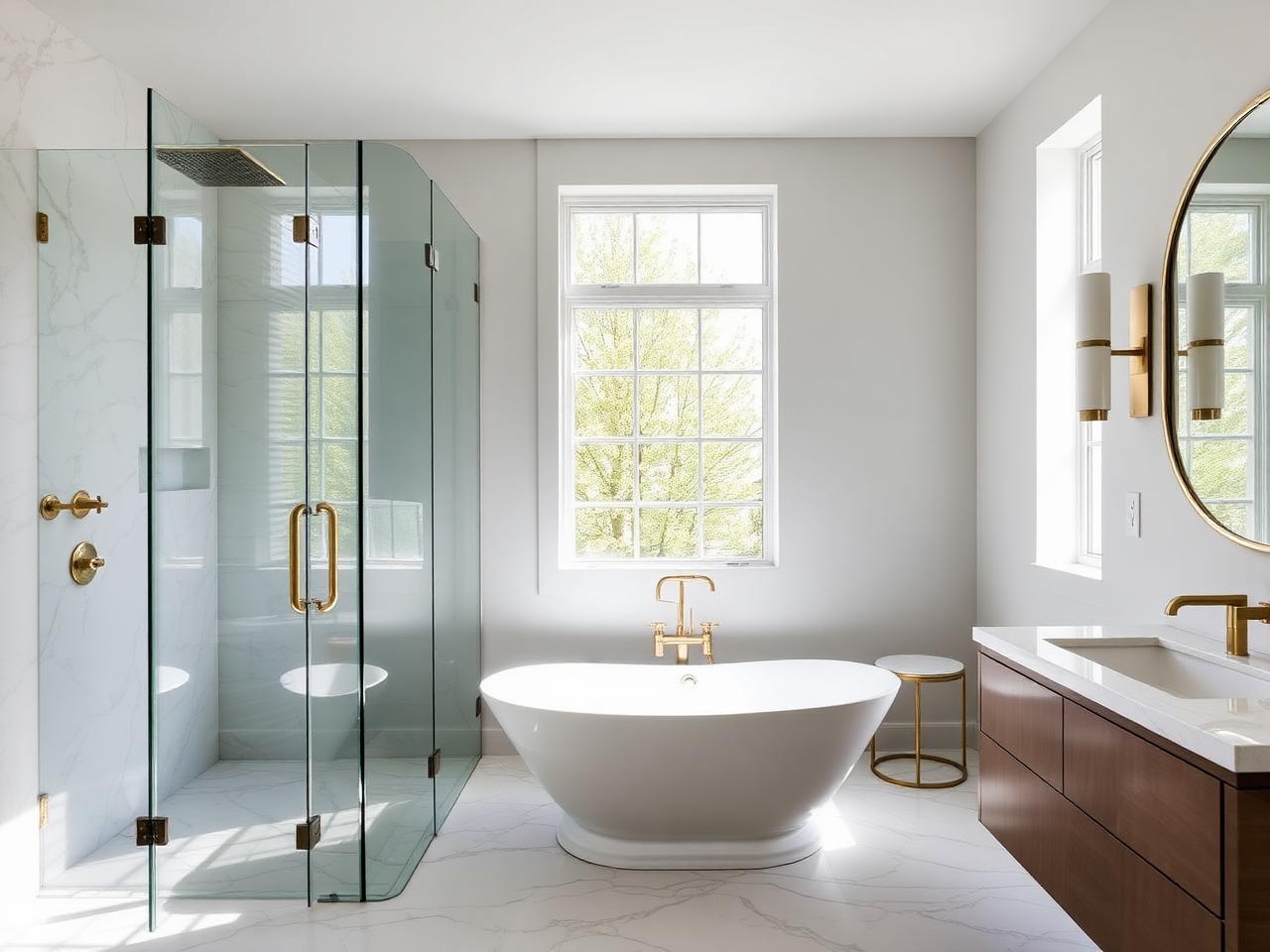
Start With How You Actually Use the Bathroom
This decision comes down to daily habits more than trends. If nobody in the household regularly takes baths, and the tub mostly serves as a shower with a curb in the way, a curbless walk-in shower is usually the more functional choice. If you have young kids who need a tub for baths, or you genuinely use a soaking tub to unwind, removing the only tub in the house is worth thinking through carefully.
It's also worth considering the bathroom in context: if this is the only full bathroom with a tub in the house, many homeowners keep at least one tub somewhere, often in a guest bath, even while converting their primary bathroom to a walk-in shower.
The Case for a Walk-In Shower
A curbless, walk-in shower removes the step-over threshold entirely, which makes daily use easier for anyone with mobility concerns, whether that's an aging homeowner, someone recovering from an injury, or simply someone who prefers not to navigate a slippery tub edge. It also tends to make a small bathroom feel larger, since a frameless glass enclosure (or no enclosure at all, with a well-placed showerhead) opens up sightlines that a tub-shower combo's curtain or sliding door doesn't.
Walk-in showers pair well with other aging-in-place features, heated floors, a built-in bench, grab bar blocking installed during construction rather than retrofitted later, without looking clinical or institutional if the design is handled thoughtfully. The aging-in-place bathroom guide covers how to do this without the space reading as a medical fixture.
The Case for Keeping a Tub
Tubs remain a meaningful factor in resale value for many buyers, particularly families with young children, and removing the last tub in a home is a decision worth thinking through if you expect to sell within the next several years. A soaking tub is also simply a different daily experience than a shower, and for households that actually use it, no shower replicates that.
A tub-shower combo is generally the lower-cost option of the two since it doesn't require the drain relocation, additional waterproofing, and glass enclosure that a curbless shower conversion typically involves. For a guest bath that sees occasional use, keeping a standard tub-shower combo is often the more practical choice than converting it to a walk-in shower.
Ready for a free bathrooms inspection? See our bathroom remodeling services →