
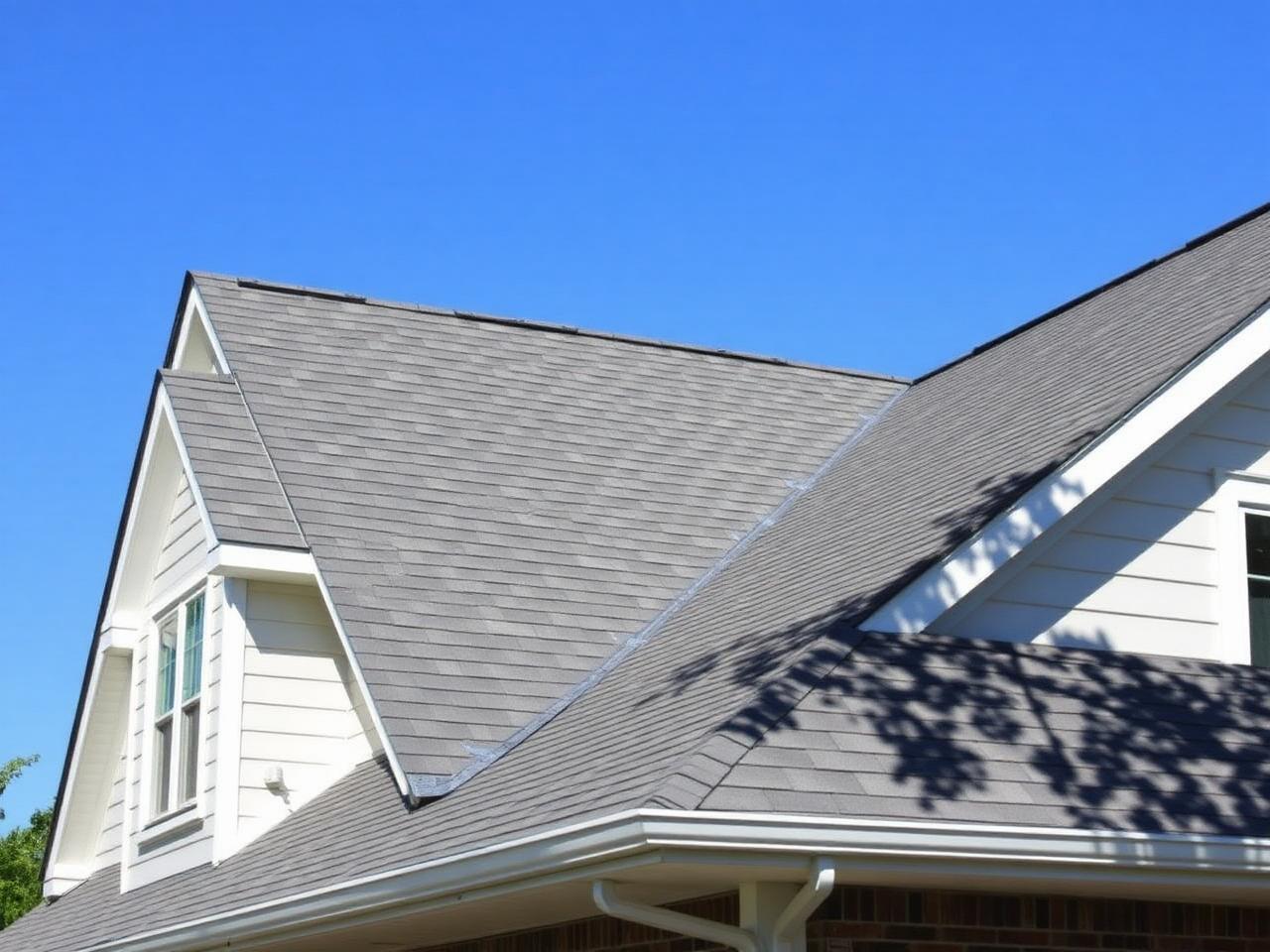
What Michigan Winters Actually Do to a Roof
The damage that shows up in April usually started in January, and it's rarely dramatic. Freeze-thaw cycling is the main mechanism: water works into a small gap, freezes, expands, widens the gap slightly, and thaws. Repeated across a Michigan winter, that cycle turns a hairline crack in sealant into an opening, lifts shingle edges that were adhered, and works fasteners loose. None of it is visible as damage — it's visible as a roof that looks about the same as it did in the fall.
Ice dams do the more concentrated harm. When heat escaping into the attic melts snow on the upper roof and that meltwater refreezes at the colder eave, the resulting ridge of ice backs water up under the shingles, where roofing isn't designed to resist it. The interior symptom often shows up months later as a stain near an exterior wall. Our guide on preventing ice dams covers the attic insulation and ventilation side of that problem, which is where the actual fix lives.
Wind is the third factor, and Michigan gets plenty of it year-round. Winter wind on a roof with brittle, cold shingles lifts and creases them in ways that don't necessarily remove them. A creased shingle looks intact from the ground and has lost most of its ability to shed water. This is the single most common thing homeowners miss between seasons.
What You Can Safely Check From the Ground
Start with binoculars and a slow walk around the house — not a ladder. Look at each slope for shingles that are missing, lifted at a corner, or lying at a slightly different angle than their neighbors. Look along the ridge and hips for displaced cap shingles, which are the most exposed part of the roof and often the first to go. Check the valleys for debris buildup, since a dammed valley forces water sideways under the shingle edges instead of down and off.
Look at your gutters and downspouts next, and look at them twice: once for whether they're full or sagging, and once for dents. Dented gutters, downspouts, and vent caps are soft-metal evidence of a hail event, and they're the collateral damage an insurance adjuster uses to corroborate that hail of a given size actually hit your address. Check window screens and any aluminum or vinyl siding on the storm-facing elevation for the same reason.
Then look at the ground. A scattering of shingle granules at the bottom of downspouts is normal in small amounts on a newer roof and is a real signal on an older one — granules are the shingle's UV protection, and once they're gone the asphalt underneath degrades quickly. A concentrated pile after a single storm is different from a light dusting accumulated over years.
Finally, go inside and up to the attic with a flashlight on a bright day. You're looking for daylight where there shouldn't be any, dark staining or streaking on the underside of the decking, damp or compressed insulation, and any smell of mildew. The attic tells you about active water intrusion far earlier than a ceiling stain does.
What Needs Someone on the Roof
Hail bruising is the clearest example of damage you cannot assess from the ground. A hail impact on an asphalt shingle often leaves a soft, dark spot where the granules have been knocked away and the mat underneath has been fractured — it's identified as much by feel as by sight, and it's essentially invisible from a driveway. A roof can have enough bruising to qualify for a full insurance-covered replacement and look completely normal from below.
Flashing is the second. The seams where the roof meets a chimney, a wall, a skylight, or a vent pipe are where most leaks actually start, and evaluating whether step flashing is properly woven or whether counter-flashing has pulled out of a deteriorating mortar joint means being up there. Our guide on flashing, valley, and chimney leaks covers what each failure looks like and what a lasting repair involves.
Decking condition is the third, and it's the one with the largest financial consequence. Soft spots underfoot mean water has been getting in long enough to compromise the sheathing, which changes a repair from a shingle job into structural work. It also can't be assessed without weight on the roof.
Do not do any of this yourself. Roofs are the leading source of serious homeowner falls, a winter-damaged roof is less stable than it looks, and walking a compromised roof can create damage that complicates an insurance claim. We inspect for free, which makes the calculation straightforward.
Timing, and Why Spring Matters
There's a practical reason to run this checklist in late winter or early spring rather than after the first major storm: scheduling. Metro Detroit roofing capacity gets consumed within days of a significant hail or wind event, and the homeowners who get on a schedule first are the ones who already had a documented inspection on file. Being in the queue with a known scope beats calling from the back of the line.
There's an insurance reason too. Policies impose deadlines for reporting a loss, and damage becomes harder to attribute to a specific storm the more weather passes over it. A roof documented in March gives you a clear before-and-after if something hits in June. Without that baseline, a carrier evaluating a claim in the fall is looking at damage that could have accumulated across three separate events, one of which may fall outside your reporting window.
The last reason is simply that spring repairs are cheaper than emergency repairs. A creased shingle addressed in April is a minor service call. The same shingle failing during a July downpour is an emergency response, possibly a tarp, and interior damage on top of the roof work.
If You Find Something
If storm damage looks likely, the sequence matters. Get the inspection and the written scope before you call your insurance carrier, not after. Filing a claim that gets denied still goes on your claims history, and knowing whether you have documented, qualifying damage before you open a claim is worth the one visit it takes to find out. Our guide on working with an insurance adjuster covers what happens once a claim is open, including why having your contractor present for the adjuster's inspection changes outcomes.
If what turns up is ordinary wear rather than storm damage, that's a different and more straightforward conversation — one about roof age, remaining service life, and whether a repair is buying real years. Our guide on roof repair cost lays out what each category of repair actually runs and where repair stops making financial sense against replacement.
Either way, the useful outcome of a spring inspection isn't always a job. Often it's simply knowing the roof is fine, with photographs on file, before the season that tests it.
Ready for a free roofing inspection? See our roofing services →