
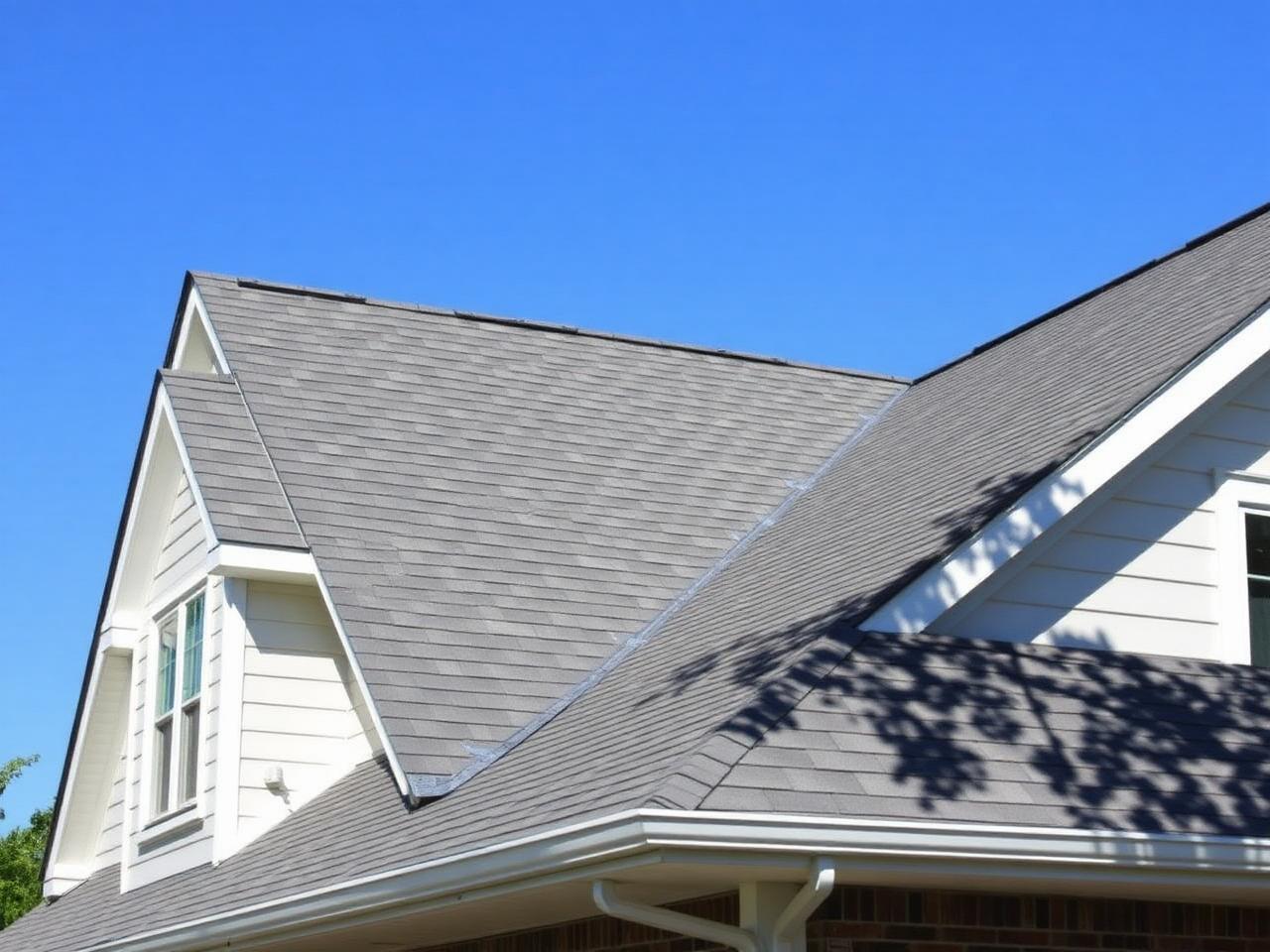
What an Adjuster Is Actually Doing on Your Roof
An insurance adjuster's job on a storm-damage claim is narrower than most homeowners expect. They are not evaluating whether your roof is old, whether it leaks, or whether it should be replaced. They are determining one thing: whether a specific covered peril — typically wind or hail on a specific date — caused damage, and if so, what it costs to restore what that peril damaged. Everything else, including a roof that's plainly at the end of its life, falls outside what they're there to decide.
That distinction explains most of the frustration homeowners have with the process. A twenty-two-year-old roof with widespread granule loss and curling shingles may be functionally finished, but if the adjuster can't tie damage to the storm event, none of that age-related deterioration is covered. Conversely, a five-year-old roof in otherwise perfect condition can qualify for a full replacement if the hail strikes are dense enough across enough slopes.
On the roof itself, the adjuster is typically marking off a test square — often a ten-by-ten-foot area on each slope — and counting impact marks within it. The number of qualifying hits per square, compared against the carrier's threshold, is frequently what determines whether that slope is approved for repair, for replacement, or for nothing at all. This is a mechanical, countable process, which is precisely why preparation matters: what gets counted depends heavily on where they look.
They're also evaluating collateral evidence — dents on soft metals like gutters, downspouts, vents, and any air conditioning fins, plus damage to fencing, siding, and window screens. Soft-metal damage is often the strongest supporting evidence a hail event of a given size actually occurred at your address, which is why it matters even though nobody files a claim over a dented downspout.
What to Do Before the Adjuster Arrives
Document the storm itself first. Note the date and rough time, and save anything that establishes conditions at your address — local news coverage, weather alerts on your phone, photos or video of hail on the ground with something for scale like a coin or a golf ball. Carriers frequently pull their own weather data for the property, and if that data is ambiguous, your contemporaneous documentation is what closes the gap.
Photograph interior damage as it appears, not after you've cleaned it up. Water stains on ceilings and walls, buckled flooring, damp insulation in the attic — take wide shots that establish where in the house you are, then close shots of the damage itself. Keep receipts for anything you spend on emergency mitigation, like a tarp or a water-extraction service. Most policies cover reasonable emergency measures, and most homeowners forget to claim them.
Do not attempt to inspect the roof yourself. Storm-damaged roofs are actively hazardous, hail bruising is difficult to identify without training, and walking a compromised roof can create damage that complicates the claim. Have a contractor do the pre-inspection instead. What you want going into the adjuster meeting is a written scope of the damage, prepared by someone who inspects roofs for a living, that covers every slope and every accessory — not a general sense that the roof looks rough.
Then schedule the adjuster and your contractor to be there at the same time. This single step changes claim outcomes more than anything else in this article. It is standard, carriers expect it, and it means the person who found the damage is standing on the roof next to the person deciding whether it's covered, rather than exchanging documents about it a week later.
Where Claims Commonly Come Up Short
The most frequent under-scope isn't a denied claim — it's an approved claim that only covers part of what was damaged. A single storm-facing slope gets approved while three others with lighter but genuine damage don't. This happens easily: if the test square on a given slope lands in an area with fewer strikes, that slope's count comes in under threshold even though the slope as a whole qualifies. Where the square is placed can determine the outcome for an entire elevation.
Accessories are the second common gap. Ridge caps, hip and ridge shingles, pipe boots, vents, drip edge, and flashing all have to be replaced as part of a re-roof, and they're routinely omitted from an initial scope focused on shingle squares. So are code-required items — ice and water shield coverage, ventilation requirements, and disposal — that a municipality will require on a permitted tear-off whether or not the carrier initially included them. Most policies carry ordinance or law coverage precisely for this, but it generally has to be identified and requested.
Matching is the third. If shingles matching your existing roof are no longer manufactured, or if a partial replacement would leave a visibly mismatched elevation, that can change what a reasonable restoration looks like. Michigan homeowners' policies vary in how they treat matching, and it's worth knowing what yours says before you agree that a single-slope repair resolves the claim.
None of these are accusations of bad faith. Adjusters are working quickly across a large volume of claims after a regional storm, often on properties they've never seen, using a standardized process. Things get missed. The remedy is simply having someone present whose job is to notice.
Understanding What You'll Actually Be Paid
Most roof claims are settled on a replacement cost value basis, paid in two parts. The first check is the actual cash value — the replacement cost minus depreciation for the age and condition of the roof, minus your deductible. The second payment, called recoverable depreciation, is released after the work is completed and documented. This structure surprises people constantly: the first check often looks far too small to replace a roof, and it isn't meant to be the whole amount.
If your policy is written on an actual cash value basis instead, there is no second payment, and the depreciation is simply not recoverable. On an older roof that difference can be substantial. It's worth confirming which basis your policy uses before the claim rather than after, along with whether your deductible for wind and hail is a flat dollar amount or a percentage of the dwelling coverage — percentage deductibles are increasingly common and are often much larger than homeowners assume.
Your deductible is yours to pay. Any contractor offering to waive it, absorb it, or make it disappear through creative invoicing is proposing insurance fraud, and it puts you at risk, not just them. It's also a reliable signal about how the rest of that relationship will go. A legitimate contractor bills the approved claim amount, collects your deductible, and documents the completed work so the recoverable depreciation gets released.
If the Claim Comes Back Short or Denied
A first decision is not a final decision. If a claim is denied or scoped lower than the actual damage, you can request a re-inspection, and it's a routine request rather than an escalation. What makes a re-inspection productive is new or better-organized information: photographs from slopes the adjuster didn't inspect closely, a documented count from a different test square location, manufacturer documentation on matching, or specific code requirements the initial scope didn't account for.
Ask for the adjuster's written estimate and read it line by line against your contractor's scope. Differences usually cluster in a few predictable places — square count, accessories, ice and water shield coverage, disposal, and whether steep or multi-story access charges were included. A line-by-line comparison converts a vague disagreement about the total into a specific, answerable list, which is a far easier conversation to have with a carrier.
If a supplemental request doesn't resolve it, most policies include an appraisal clause: each side names an appraiser, and the two select an umpire whose decision resolves the dispute. It's slower and it has costs, but it exists specifically for disagreements about the amount of a loss and it's worth knowing it's available. Michigan also allows you to file a complaint with the state's insurance regulator if you believe a claim is being handled improperly.
One practical constraint: policies impose deadlines for reporting a loss and for completing repairs, and they're shorter than most people expect. If you're going to dispute a scope, start the process early rather than letting months pass while you decide.
How We Work These Claims
We inspect for free and we tell you honestly whether you have a claim. Storm damage that doesn't meet a carrier's threshold is common, and filing a claim that gets denied is not a free action — it goes on your claims history. If what we find is age-related wear rather than storm damage, we'll say so, and then the conversation becomes a straightforward one about roof age and replacement timing rather than an insurance question. Our full guide on telling storm damage apart from ordinary aging covers how that call gets made.
When there is a claim, we photograph everything, prepare a written scope in the format adjusters work from, and meet your adjuster on-site so the damage gets evaluated with someone there who has already been on the roof. Our team takes ongoing training specifically on what carriers currently require, because those documentation standards shift and a scope written to last year's expectations gets more pushback than it should.
We bill according to the approved claim, and you're responsible for your deductible — nothing more, and no arrangement that pretends otherwise. If the initial scope comes back short of the actual damage, we prepare the supplemental documentation and work it with the carrier rather than asking you to negotiate a roofing scope on your own.
Ready for a free roofing inspection? See our roofing services →